


For the Record
Dr. Julia McLawsen has spent her career at the intersection of psychology and the law. She’s here to tell you it looks nothing like what you’ve seen on TV.
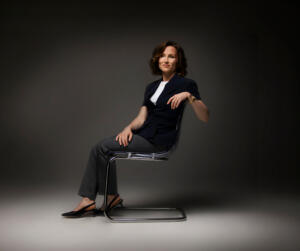 Somewhere between “CSI” and “Criminal Minds,” the word “forensic psychologist” got hijacked. It now conjures a very specific image of a brilliant savant with preternatural instincts, moving through a crime scene, reading a killer’s psychology from the arrangement of throw pillows. The reality—which Dr. Julia McLawsen has been navigating for the better part of two decades—is at once less cinematic and considerably more interesting.
Julia is a forensic psychologist in private practice in the Seattle area and a member at Bellevue Club, where she “keeps her body tuned up so her brain can follow.” She is also the cofounder of FAST (Forensic Assessment Services Team), a decentralized forensic psychology practice she launched in late 2024 with her longtime friend and colleague Dr. Claire S. Ashbaugh. But before we get too far into it, there’s a more fundamental question worth settling immediately: What does a person mean when they use the word “forensic”?
“The word ‘forensic’ just means that a scientific discipline is being applied to legal decision-making,” Julia explains. “Forensic psychology is the science of psychology being used to inform legal outcomes. That’s it.” No crime scenes. No profiling. No gut feelings dressed up as expertise.
In a cultural moment when true crime dominates podcasts, Netflix, and a whole universe of amateur sleuths on Reddit, that clarification really matters. Let’s debunk some more myths around forensic psychology.
Myth: Forensic psychologists solve crimes
Criminal profiling—the kind you see on television, where a psychologist strides into an FBI briefing room and describes an unknown suspect’s childhood trauma from a pattern of evidence—is its own discipline, rooted more in criminology than psychology. Julia doesn’t do that. She’s not an investigator. She doesn’t go to crime scenes. What she does is evaluate people who are already involved in the legal system—defendants, plaintiffs, litigants of all kinds—and translate psychological findings into evidence-driven opinions that help judges and juries make more informed decisions. Courts and attorneys provide records; she reviews them, conducts structured interviews and standardized testing, and produces a detailed written report.
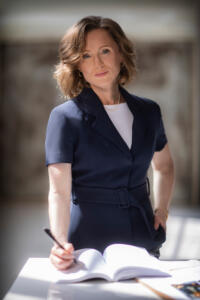 “Every step of an evaluation has to stand up to intense scrutiny,” she says. “In Washington State that means the methods we use have to be generally accepted within the scientific community.” Think of it less like detective work and more like a high-stakes opinion that must survive extreme cross-examination. She uses an analogy: “Kind of like a pilot. I try to pay attention to my instruments more than my own personal reactions.” Intuition gets audited. The work is rigorous precisely because the stakes—people’s liberty, their families, their financial futures and their well-being—demand nothing less.
Myth: Forensic psychologists are hired guns for one side
This one has some basis in reality, which is part of what makes it worth addressing. There are forensic psychologists who have developed reputations for reliably favoring whoever retained them. Those reputations, Julia notes, tend to abbreviate careers. Attorneys and judges notice.
To avoid this, Julia has a screening process. When an attorney first contacts her about a case, she asks directly: If the evaluation yields results that aren’t favorable to your client, how would you feel about that? “Almost all the attorneys I speak to say: That’s exactly why we’re hiring you. We want somebody who’s going to be straight with us.” On very rare occasions, if an attorney signals something different, Julia’s response is simple: “Then I’m probably not the psychologist you’re looking for.”
“My only allegiance is to my methods and the opinions those methods produce.”
Julia is sometimes retained by both sides as a stipulated expert—meaning plaintiff and defense agree in advance to abide by her findings, whatever they are. When results aren’t favorable to a litigant in a civil matter, an attorney can simply choose not to call her to testify. It’s more complicated in criminal law in Washington State as an expert with unfavorable findings can still be compelled to testify if called by the opposing side. Either way, her job is the same: provide a candid, unbiased opinion.
Myth: It’s all extreme cases
True crime traffics in extremes—the most lurid, the most baffling, the most morally complex. Julia’s caseload spans misdemeanor theft to multimillion-dollar civil suits. She does competency evaluations, personal injury evaluations for plaintiffs alleging psychological harm and reviews of whether a mental health provider’s treatment met the standard of care. The people she evaluates, she says, “come from all walks of life.”
 There’s also far less courtroom drama than the genre suggests. Only 2 to 3 percent of criminal cases go to trial, and roughly 1 percent of civil cases. Even when a case does go to trial, a forensic psychologist isn’t guaranteed to testify. Julia estimates she ends up on the stand about once a year, when she “reluctantly puts on a suit,” she adds with a smile. Most of her work happens in reports and records review, in long focused blocks of time carved out to give individual cases her full attention.
Myth: Forensic psychologists decide guilt or innocence
Julia doesn’t decide outcomes. She answers specific questions—defined in statute, administrative code or case law—and provides opinions that help the judge or jury make a more informed decision. The responsibility for ultimate conclusions always rests with the court. Her ethical guidelines are explicit: Forensic psychologists are not to provide an ultimate opinion unless the trier of fact (like a judge) specifically asks them to do so. “We answer specific questions within the parameters of legal standards. We don’t issue verdicts.”
When results are genuinely ambiguous—and sometimes they are—she says so, outlining evidence for and against a conclusion and recommending the court weigh both. Occasionally a judge will ask what she thinks the legal conclusion should be. “And then I’ll give my opinion,” she says simply. “But that step requires the court to ask.”
The Weight of the Real Thing
Somewhere underneath all of this there is a human being doing a genuinely hard job. The people Julia evaluates are under enormous stress, being asked to discuss traumatic events and mental health crises with a stranger. She has to build rapport quickly, sometimes with people who don’t want to be there. Empathy isn’t in competition with objectivity in her view—it’s what makes the objectivity possible. “Somebody’s going to feel more comfortable if I’m able to come across as a human who truly does care about their well-being.”
 That balance—rigorous and human at once—is also what motivated Julia and her cofounder to launch FAST. The problem is systemic: Many skilled forensic psychologists start their careers working for government agencies, then leave for private practice. In private practice, they thrive until they’re so in demand that they no longer have availability to accommodate the challenging timelines of public defense cases, leaving public defenders scrambling to find qualified evaluators. In Washington State, wait times for certain court-ordered evaluations—particularly for out-of-custody defendants—can extend to about a year, which can feel like an eon for someone sitting in legal jeopardy.
FAST’s solution is a deliberately decentralized practice model: a network of forensic psychologists with diverse specialties, collaborating on complex cases and maintaining a level of responsiveness and flexibility that traditional solo practices can’t match. Since opening in November 2024, the demand has been immediate—local public defenders have embraced the model, attorneys across a wide range of practice areas are referring colleagues, and the team continues to grow. “It’s solving a problem that needed to be solved,” Julia says. The work she does—meticulous, evidence-driven, unglamorous in the best possible way—continues to bear no resemblance to television. For the people whose legal futures depend on someone getting it right, that’s not a limitation. It’s the whole idea.