


Rome, Revealed
Rome hardly needs an introduction.
As the former capital of an empire that shaped much of the Western world, it’s a city where ancient monuments, Renaissance palaces and everyday Italian life exist side by side. From icons like the Colosseum to quiet churches layered with centuries of art and history, Rome rewards both first-time and return visitors with equal depth.
Now, getting there is easier than ever. Alaska Airlines recently launched nonstop service between Seattle and Rome, connecting the Pacific Northwest directly to the Eternal City. With that in mind, consider this your starting point: a curated guide to the places to explore, eat and stay that go beyond the obvious, showing a more textured side of Rome.
What to Do
First-time visitors to Rome shouldn’t miss the big hits: the Colosseum and Roman Forum, the Vatican Museums and Sistine Chapel, the Pantheon and the Trevi Fountain (just go early to avoid the crowds). If you’ve already checked off these iconic spots and are seeking more off-the-beaten-path experiences, the city is filled with hidden gems.
Domus Aurea
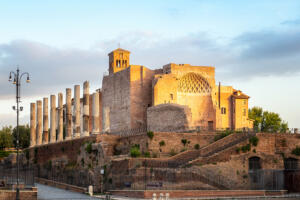 When the Great Fire of Rome devastated large swaths of the city in 64 C.E., Emperor Nero seized the opportunity to annex the land to build a vast, palatial pavilion called the Domus Aurea, or “Golden House.” It featured opulent, marble-covered halls, detailed frescoes and an artificial lake, where the Colosseum now stands. For centuries, it was buried beneath layers of earth and later construction, until the palace was rediscovered during the Renaissance. The intricate frescoes they found, preserved by the darkness, went on to influence figures like Raphael, shaping decorative motifs that spread across Europe.
Today, guided visits feel part archaeological site exploration, part immersive experience. Walk through vaulted chambers and corridors while learning about the ongoing restoration, with multimedia projections that help reimagine what it once looked like. Access is limited to weekends, and tickets must be booked in advance. Availability can be tight, so be sure to reserve early. ticketing. colosseo.it
Galleria Doria Pamphilj
One of Rome’s most atmospheric and hidden art collections, the Galleria Doria Pamphilj is still privately owned by the aristocratic Doria Pamphilj family and housed within their historic palace near Via del Corso. Unlike a traditional museum, it feels more like a noble residence, with rooms lined floor-to-ceiling with gilded frames, mirrors and ornate furnishings.
The collection includes Baroque masterpieces by artists such as Caravaggio, Velázquez and Bernini, displayed exactly as they have been for centuries. The path takes you through a sequence of splendid salons, each more elaborate than the last. Crowds here tend to be sparse, offering a sense of respite and intimacy rarely found in Rome’s major museums. Purchase tickets online or at the entrance, though advance booking is recommended.
doriapamphilj.it
Basilica of San Clemente
Think of Rome as a lasagna, a city layered with thousands of years of history stacked above and beneath the surface, to the point that every excavation in the city center uncovers historical artifacts. Nowhere is this more observable than in the Basilica of San Clemente, a 12th-century church near the Colosseum, richly decorated with mosaics. But the real intrigue begins underground.
Enter the basilica and descend a staircase into a fourth-century church preserved beneath the aboveground structure. Go down further still to reach a first-century Roman house and a Mithraic temple, once used for ancient mystery rites dedicated to the god Mithras. Moving through these levels is to walk backward through time, with each layer revealing a different chapter of Rome’s transformation from imperial city to Christian center. Tickets are purchased on-site, and guided visits are recommended to fully understand the complex history and excavation.
basilicasanclemente.com
Where to Eat
Salumeria Roscioli
A cornerstone of Rome’s culinary scene, Salumeria Roscioli is a restaurant, wine bar and deli boasting more than 350 kinds of cheese, over 150 varieties of cold cuts and upward of 300 specialty food products. The menu is colossal (the wine list even more so), but it’s impossible to go wrong. Start with a Negroni, then dive into the Cantabrian anchovies with sweet vanilla butter, a plate of paper-thin mortadella made in-house and a bowl of rich, simple burro e parmigiano (butter and Parmesan) pasta. Bring friends so you can share and book ahead. I recommend a table upstairs or outside.
salumeriaroscioli.com
Armando al Pantheon
Statistically speaking, Armando al Pantheon should not be a good restaurant. Located a few steps from one of Rome’s greatest monuments, one would assume it to be another so-so eatery with a menu translated into six languages and a daily happy-hour special. But since 1961, the Gargioli family has been serving delicious Roman classics in their intimate, wood-paneled dining room. Don’t miss the crisp pizza with stracciatella cheese, anchovies and pistachio, followed up by Rome’s famous pastas: spaghetti alla Gricia, rigatoni all’Amatriciana and spaghetti alla carbonara. Reservations open online exactly one month ahead, and spots fill up quickly.
armandoalpantheon.it
Bonci Pizzarium
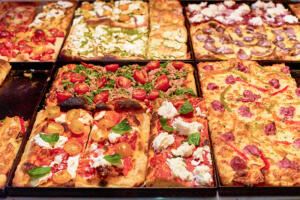 Bonci Pizzarium is a landmark for pizza al taglio, Rome’s take on pizza that differs distinctly from its Neapolitan counterpart. While pizza from Naples is round, soft and served whole, Roman pizza al taglio is baked in large rectangular trays, with a lighter, crisp-edged crust, then cut into slices and sold by weight.
At the helm is Gabriele Bonci, known for his cold-fermented dough and high-quality produce from biodynamic farms. Toppings shift constantly with the seasons, but signatures like potato with mozzarella or tomato-oregano are always on the menu. Expect fast-casual service and often a line out the door.
bonci.it
Ba’Ghetto
With the ruins of the ancient Portico of Octavia as a stunning backdrop, Ba’Ghetto sits at the heart of Rome’s Jewish Quarter, a riverside enclave established in the 16th century as the city’s historic ghetto. The star dish here is carciofi alla giudia, artichokes flattened and fried until perfectly crisp and finished with a dash of salt. Artichoke season is at its peak from late winter into spring, though you’ll still find them on the menu most of the year. At Ba’Ghetto, they’re a standout, served alongside other Roman-Jewish staples reflecting the neighborhood’s enduring food culture.
baghetto.com
Gelato
No trip to Italy is complete without a gelato or two–or 10. Here, flavors rotate through the seasons, with bright fruit in warmer months, richer creams and nuts in cooler ones. A quick way to spot the real thing: Look for gelato stored flat or in covered tins rather than piled into towering, fluffy mounds, and colors that feel true to the ingredient. For example, pistachio should be a lovely muted green, not intensely green.
Shops like Fatamorgana lean creative, with unexpected flavor pairings alongside well-executed classics. Otaleg (that’s gelato spelled backward) focuses on small-batch production and particularly pure, expressive ingredients, with both classic and more experimental flavors. For something more traditional, Giolitti—open since 1900 near the Pantheon—remains one of the city’s most enduring gelaterias, offering a wide range of classic flavors in an old-school setting.
Casa Dolcetta
After 18 years of welcoming guests into her cozy Aventine Hill home for cooking classes, Daniela del Balzo has passed the apron to her son Francesco, a talented chef who hosts pop-up dinners throughout Italy and in London, Mexico City, New York and beyond. The tailored experience begins at Testaccio Market, where you’ll meet him and his wife, Constance, a sommelier, to browse seasonal produce, sample local specialties and gather ingredients before returning to the family kitchen. Francesco brings a contemporary touch to his mother’s traditional recipes, teaching you how to master dishes like silky carbonara or Neapolitan-style meatballs with Turkish raisins and pine nuts. The afternoon ends around the table, sharing the plates you’ve prepared, with recipes to take home and re-create long after your time in Rome.
instagram.com/casa.dolcetta
Where to Stay
Casa Monti
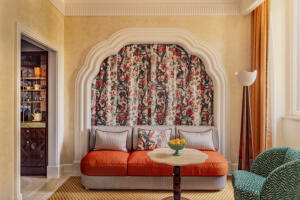
Casa Monti brings a fresh, maximalist perspective to Rome’s Monti neighborhood, set along Via Panisperna among hip boutiques and artist studios. The award-winning French designer Laura Gonzalez—who most recently debuted Printemps in New York—brought her playful, layered energy to the property’s colorful communal spaces and 36 rooms, each with its own distinct personality and decor.
In a city full of grand, neoclassical hotels, Casa Monti stands apart as more intimate and contemporary, and it’s been embraced by the neighborhood. Head to the gorgeous rooftop bar or charming restaurant, and you’ll find a mix of in-the-know locals and travelers soaking in the stylish atmosphere.
casamontiroma.com
Palazzo Dama
Set in a stately residence just steps from Piazza del Popolo and Villa Borghese, Palazzo Dama boutique hotel is still run by the aristocratic Malaspina family, who have owned the property since the 18th century. Generations of grandeur have been incorporated into the distinctly glamorous, lived-in design—think crystal chandeliers, rich textiles and a notable art collection featuring works by Andy Warhol, Pablo Picasso and Salvador Dalí.
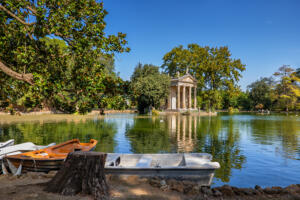
Each of the 29 rooms is individually decorated, adding to the sense of staying somewhere personal rather than uniform. Outside, a leafy garden and pool (rare for central Rome) feel like a quiet oasis in the city, while the bar and restaurant carry an understated, old-world elegance.
palazzodama.com