


Storm Chasers
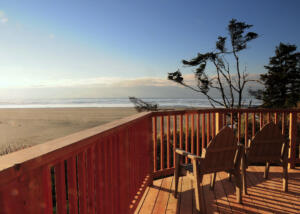 About 4 hours away from Bellevue, Iron Spring Resort sits on a bluff high above a 10-mile stretch of beach in Grays Harbor County. Lewis and Clarke stumbled upon the cove in 1805, but it’s main claim to fame arrived in the 1890s when the beach became known as the “home of the razor clam,” thanks to its plentiful supply of the bivalve.
The original resort opened in the late 1940s as a lodge with 8 cabins, founded by Seattleite Olive Little, who managed and grew the property until her death in 2007 at the age of 91.
Over time, Iron Springs fell into disrepair before being purchased by the philanthropic True family in 2010, who were frequent guests over the years. The new owners undertook an extensive renovation, modernizing the resort’s 25 cabins, while maintaining a rustic elegance.
 Overstuffed armchairs are upholstered in vintage Pendelton blankets, kitchens are updated and well-appointed and each cabin has a wood-burning fireplace or stove, a non-negotiable when the cozy potential is this high. Huge picture windows overlook the beach or Boone Creek, which feeds into the ocean. Each cabin has a deck and a grill for warmer weather.
One of the best things about Iron Springs, aside from the views and the cozy factor, is how dog-friendly it is. Each cabin comes with water and food dishes, dog towels (which you’ll need) and a doggie bed for collapsing on after a day spent chasing the surf and the gulls.  Your four-legged friend will live their best life at Iron Springs.
The accommodations at Iron Springs range from intimate one-bedroom escapes to huge cabins that can accommodate groups of up to 20. There’s a well-stocked general store on the property with staples, snacks and treats, and a few restaurants nearby, including the family-friendly Green Lantern, which has been feeding hungry razor clammers since 1916. ironspringsresport.com
Clam Diggers
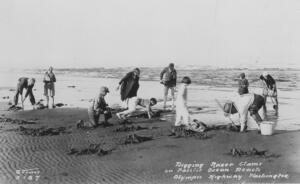 In the late 1940s commercial diggers harvested more than a million pounds of razor clams from Copalis Beach, quite a feat once you realize what goes into digging them up. Razor clams, named for their straight-razor-shaped shells, hide deep below the sand and burrow with remarkable speed. The Washington Department of Fish & Wildlife approves just a handful of days a year (during the fall and winter) for razor clam digging depending on the observed toxin levels and safety.
You’ll need a license and what’s called a clam gun to get to the clam after detecting its telltale dimple on the surface of the sand. And once you’ve reached it, you might need to stretch your whole arm down into the hole to retrieve it. This is best done at low tide, which tends to be in the wee hours of the morning during a time of year when it’s almost always raining. You’ll come home from razor clamming wet and sandy but rich in this meaty mollusk whose sweet and mild flavor lends itself to all manner of dishes, from chowder to fritto misto.